11,000 Applications a Minute: The Resume Just Stopped Working
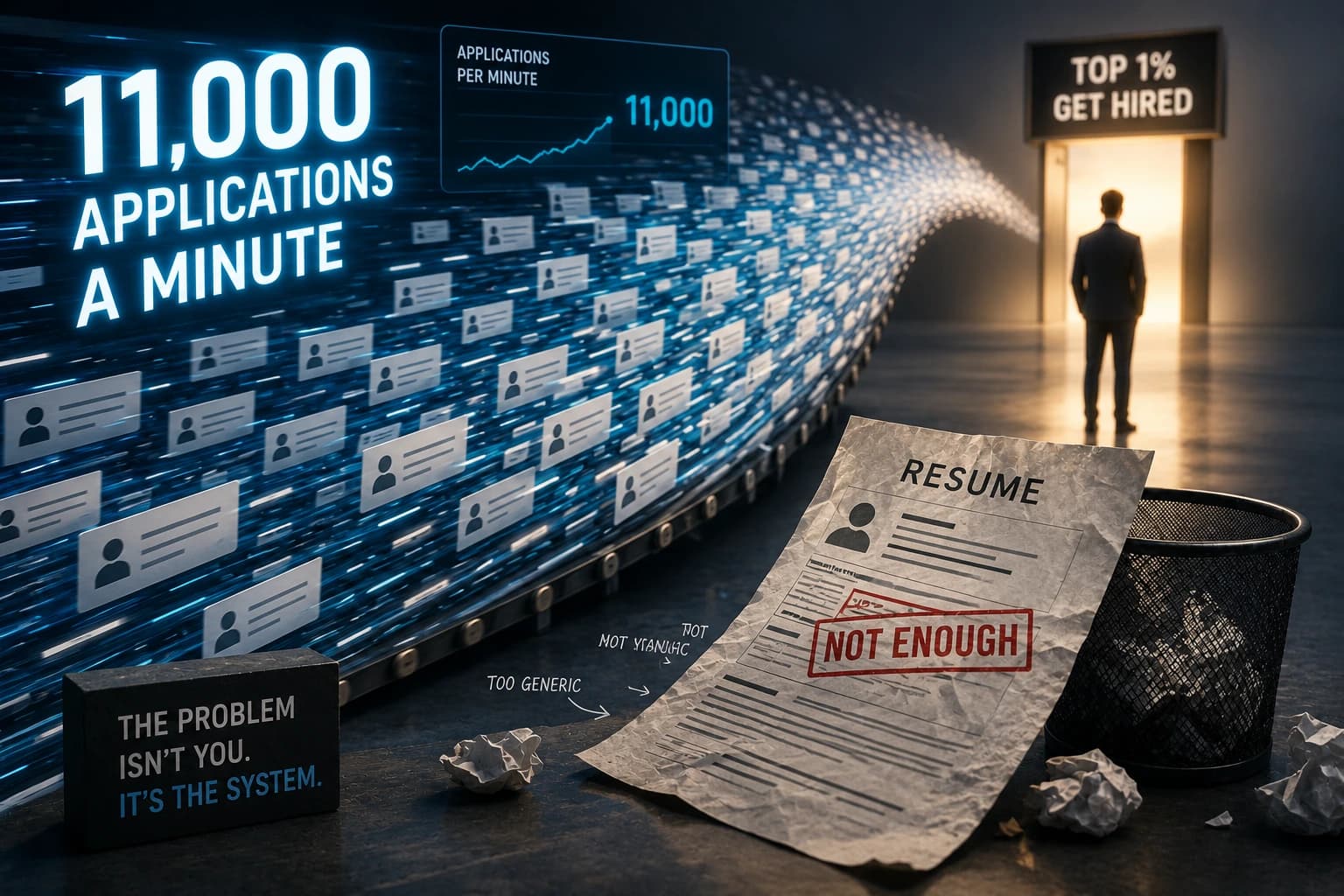
The resume survived a hundred years of hiring because it was cheap to produce and cheap to read. Generative AI broke both halves of that bargain at once — it made resumes free to mass-produce and impossible to trust.
The volume problem
LinkedIn now sees roughly 11,000 job applications per minute, a 45% year-over-year increase driven substantially by AI tools that tailor and submit applications at scale. The average job opening now attracts around 242 applications, and competitive tech and remote roles routinely cross a thousand applicants within days.
The volume lands on people: 90% of HR managers say their workload has increased because of AI-generated applications, and 74% report detecting AI-generated content in resumes and cover letters.
The arms race nobody wins
The reflexive response has been more filtering: per the World Economic Forum, over 90% of employers now use automated systems to rank or filter applications. So the market has settled into a strange equilibrium — candidates use AI to write resumes that employers use AI to reject. Both sides spend more; the document in the middle carries less signal every month.
When every resume is polished by the same handful of models, polish stops discriminating. The resume has become a formality that confirms someone wants the job — not evidence they can do it.
Move the evaluation to where the signal is
If the paper layer is saturated, the answer is to get candidates into a real evaluation faster, and make that evaluation the filter:
- Screen with conversation, not keywords. A 20-minute structured screen — even an AI-run one — reveals more than any resume ranking. It is also far harder to mass-produce: a candidate can send 500 AI resumes a day, but they can only show up to interviews they actually care about.
- Make the first real round available immediately. When the first structured interview happens within 48 hours of application, motivated candidates self-select in and drive-by applicants evaporate — the interview itself becomes the intent check.
- Score work, not narrative. Live coding, design discussions, and scenario-based screens produce recorded, comparable evidence. A resume is a claim; a transcript is data.
The bar is moving, not falling
None of this means lowering standards — it means the resume review that used to be the gate is now just routing. The teams adapting fastest treat application volume as a solved problem (let software absorb it) and concentrate human judgment where it compounds: reviewing real, structured evidence from candidates who showed up and performed.
The resume isn't dead as a document. It's dead as a filter.